


Let me get something out of the way before we go any further.
Consistency works — and it works in more places than just email (hello there, exercise!).
Show up regularly on LinkedIn with something thoughtful to say, people start to recognize you.
Publish video consistently — especially if you sound like a human and not a hostage reading a script — trust builds there too.
Long-form writing stacks. Podcasting stacks. Showing up in comment sections with something useful to add stacks over time.
There’s no one right way for everyone.
There are patterns and tools that work consistently across industry, company size, and number of customers. In my opinion, a newsletter is the single most effective way and the best starting point.
But this isn’t an argument that newsletters are the only place growth happens.
A newsletter plus LinkedIn plus video plus sharing on Substack Notes/Twitter/TikTok/Insta/WhateverComesNext all work together to increase trust and grow your business. So don’t think “either/or” think “yes/and.”
But if you’re building a marketing plan, a newsletter is often the biggest initial bang-for-your buck approach to begin.
Consistency Builds Growth
Every channel rewards consistency, but there’s a catch.
You show up. You get better. People start to expect you. You begin to make connections. And sales. One of the earliest content marketing metaphors I read was the flywheel – it takes time and effort to get it turning, but once it’s moving, it’s easier to keep it moving. The focused, regular approach is how reputations are built, in person or online; pretending otherwise is silly.
So here’s the catch.
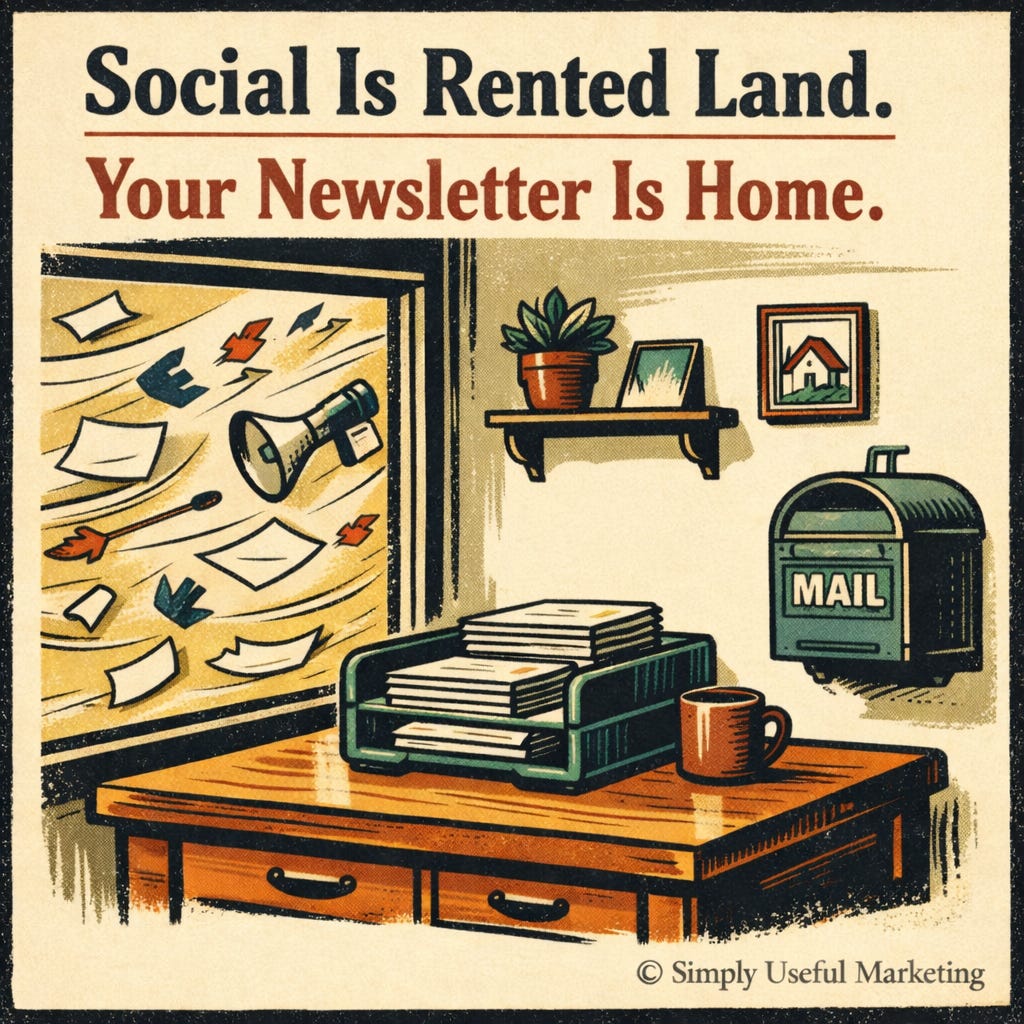
On social platforms, consistency earns you visibility — until the platform decides it would rather promote something else, such as how LinkedIn reduces the reach of any post with a link. With search, consistency earns you traffic — until an update quietly rearranges the furniture.
It’s not personal.
It’s just how rented land works.
A newsletter doesn’t make consistency more powerful.
It makes it more durable.
Because you build and own a list of people who want to hear from you. That is a one-to-one relationship that’s hard to replicate on social – and you don’t own it there.
Establishing Trust Is Important. (Yeah, I Know: Duh.)
But how you do that has almost nothing to do with “going viral” off a single moment or piece of content.
That burst of attention isn’t growth unless you show people they can trust you enough to stick around.
Why else do you think all the hustlebros have a metric shitton* of glowing reviews plastered across their sales pages? Or why companies cram as many logos as possible onto their websites? Those are trust signals — “social proof,” if we want to use the marketing term — and they exist for a reason.
People are trying to answer a very basic question:
Can I trust you?
Most growth is slow.
You do good work. You provide good service. Your content marketing helps customers remember you — and, ideally, buy from or work with you.
Over time, they come back. And when a friend or coworker asks, “Do you know anyone who…?” your name comes up.
That doesn’t happen because you were clever. Or because you went viral once.
It happens because of familiarity and reliability compounded over time — deeply unsexy things that are wildly effective.
Compounding Is About Growth (Just Not the Kind Dashboards Love)
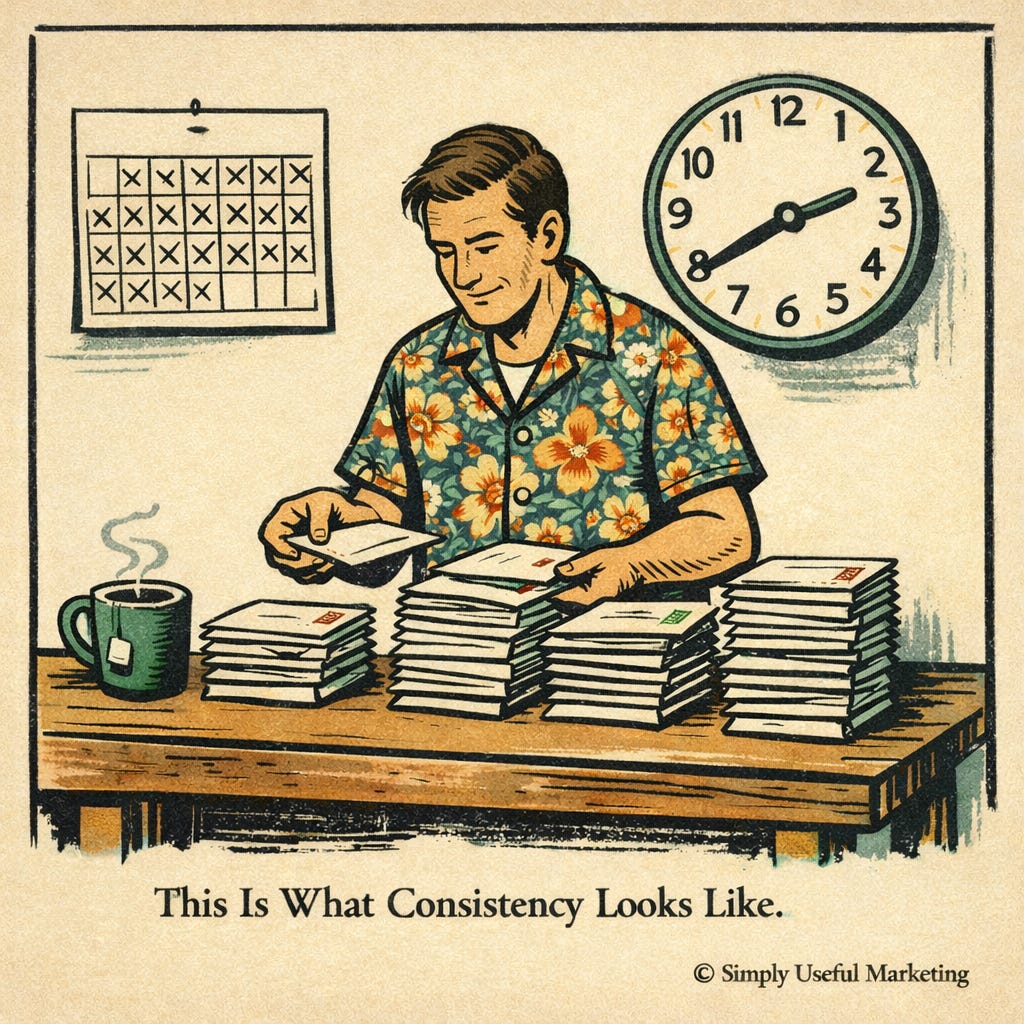
Compounding is absolutely about growth. Just not the kind that shows up cleanly in a weekly report.
It’s about effort carrying forward instead of letting it dry up.
With most marketing, each piece of work largely lives on its own. A post does well, then it doesn’t. A video gets attention, then slides down the feed. A campaign works, then you start planning the next one like the previous effort never existed.
Yes, your skills improve. Yes, recognition accumulates.
But a lot of the value still resets at the surface.
A newsletter behaves differently.
Every issue slightly increases the odds the next one gets opened. Every send reinforces the idea that you’re worth paying attention to. Every month of showing up reduces friction the next time you ask someone to reply, share, buy, or point someone your way.
That’s compounding growth. Quiet, predictable, and boring in the way that actually matters.
Newsletters Force the Right Kind of Discipline
In my opinion, a newsletter forces you into a regular cadence of sharing — of building trust.
It’s not a one-off campaign. It’s not a launch.
It’s maintenance — the slow, unglamorous work of staying present in someone’s world without yelling “LOOK AT ME” every time you show up.
This is the grind. The ongoing marketing maintenance where growth actually happens.
And I say “grind” even as I genuinely enjoy creating newsletter content, for myself and for clients. Filtering the knowledge in someone’s head into something that actually lands with their audience is a fun, fascinating challenge.
But the doing of it is a grind.
A constant, ongoing showing up — daily, weekly, monthly — to serve customers.
That’s why most newsletters die. People get tired or bored or don’t see results quickly enough and the frequency drains away until the “most recent” issue is “September 25, 2025.”
And that’s exactly why the ones that stick work so well.
Why This Still Matters
Marketing tools change. Platforms shift. Tactics age out.
But businesses still grow the same way they always have — by staying visible, being useful, and earning trust over time.
Social, video, and search are how people find you.
A newsletter is where the relationship can hit that comfortable, settled place. Sure, there should be some excitement and new things; but the baseline is stable, ongoing support. That’s your newsletter.
Email is the one relationship you own that the platforms don’t get to decide who can see what you want to share.
It’s boring, owned, predictable — and very hard to replace once it’s working.
If you want growth that stacks, it’s still one of the best places to put in the work.
If you want help building one of these without making it your new part-time job, that’s what Newsletter-in-a-Box is for. I’ll get you from blank page to first send — and keep the thing alive long enough to matter — bryant@simplyusefulmarketing.co.
*I still believe “metric shitton” should be an official unit of measure.
Metric shitton has my vote too. Great article on the value of starting (and sticking with) and newsletter