

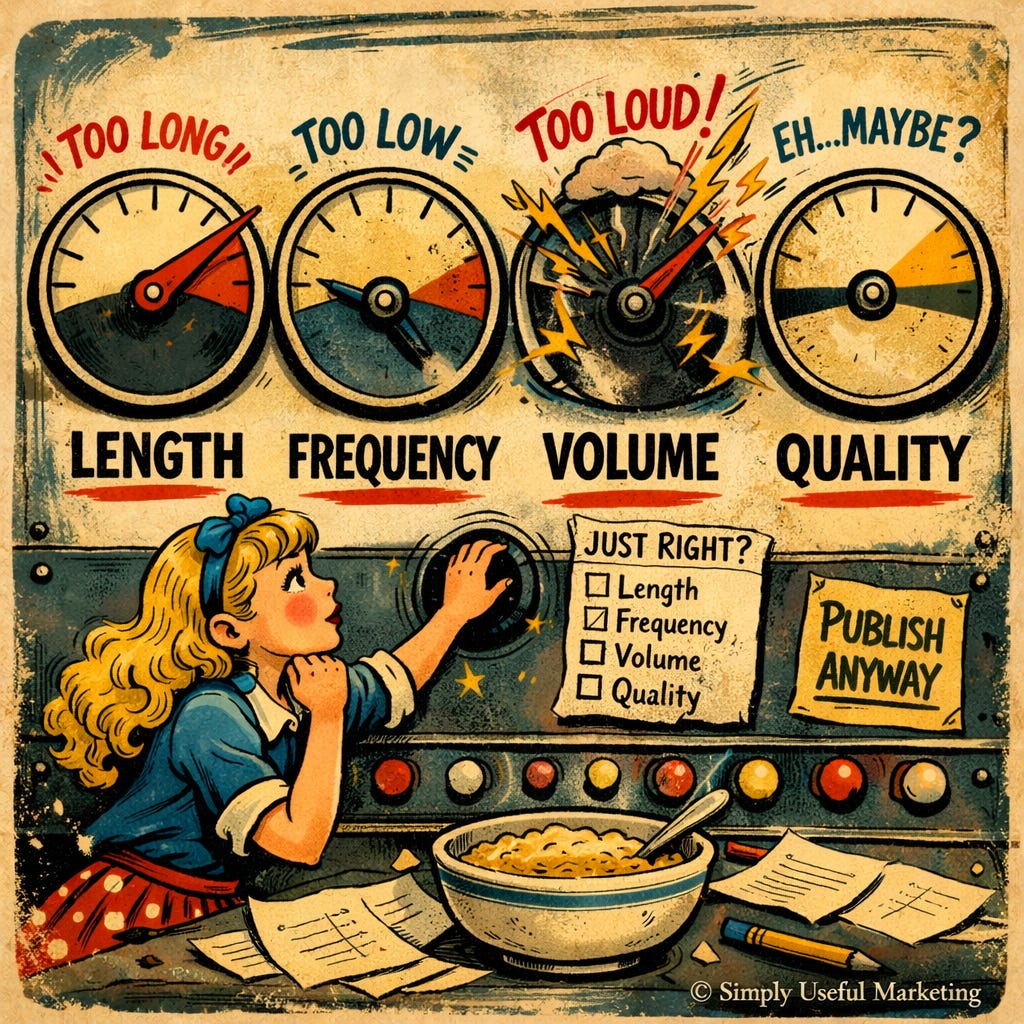
Nobody knows.
That’s the answer. I’ve been comfortable saying that for decades even though as an editor and content marketing pro it always feels like people think I’m being glib when I do.
Nobody — not the guru with the $997 course, not the algorithm whisperer on LinkedIn, not the marketing professor with a shelf full of textbooks — knows what “just right” is for your content. Not precisely anyway. The honest ones will say it anyway rather than trying to tap-dance their way through an impressive 2 minute discourse that boils down to “I don’t know for sure.”
The fear that you’ll get it wrong — too long, too short, too often, too infrequent, too much, not enough — is one of the most effective forms of procrastination I’ve ever seen. Researching can look like strategy. It feels like diligence. But it’s just paralysis by analysis.
I’ve written about pieces of this before — the “great” trap, the goldfish myth, the barking problem – but not altogether.
Here’s how they fit. Let’s go.
The “Too Long” Myth Is Still Bullshit
Let’s start with length, because this is the one that won’t die.
“Keep it short. People don’t read anymore. Attention spans are shrinking.”
No. People don’t read your shitty, self-involved content that serves you and not them. That’s a different problem entirely.
I’ve been watching content performance metrics since me, the mail room guy (now a successful Web designer), and my managing editor built our first website together in 1998. Longer content that’s actually useful consistently outperforms shorter content on time-on-site, engagement, and conversions.
And the data keeps backing this up. Long-form content of 3,000+ words performs 2.5 times better than shorter pieces. The average content length for the top 10 Google search results is approximately 2,200 words. Posts over 2,000 words generate three times more backlinks and shares than shorter ones. Content Marketing Institute data shows long-form articles get 75% more time-on-page than short pieces.
On the other hand, the average blog post length actually shrank in 2025 — down to about 1,350 words, decreasing for the second year in a row. So the average is getting shorter while the best-performing content is getting longer.
Why? Because AI is pumping out short, mediocre content at industrial scale. The floor is flooded with machine-generated filler, and it’s pulling averages down. Meanwhile, the stuff that actually works — the content people read, share, link to, and act on — keeps getting longer and more substantial.
While I remain dubious that anyone can always tell if something is created by GenAI, we all at least say we want human content. Stats show that human-generated content receives 5.44 times more traffic than AI-generated content.
The competitive advantage of writing something real and useful and long enough to actually help someone is widening, not shrinking. There’s less competition at the top because fewer people are willing to do the work.
Meanwhile, 60% of adults binge-watch TV regularly. I once turned on the first episode of Cobra Kai around 9 on a Friday night and looked up at 4 a.m. having finished the entire first season.
We pay attention to things we find interesting. That’s it. That’s the whole secret.
If it’s short and shitty, people won’t read it. If it’s long and good, they might. Length is not the problem. Usefulness is the variable.
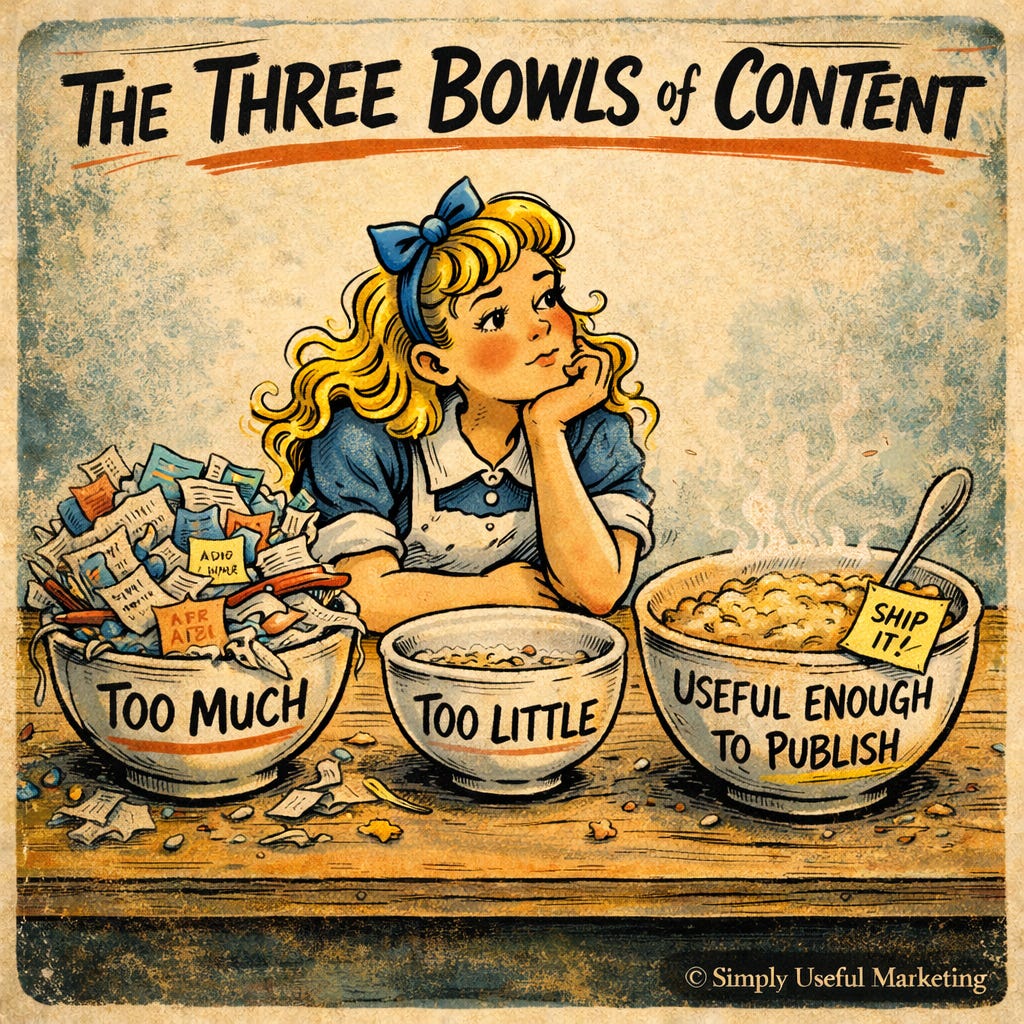
But There ARE Broad Targets
I’m not saying anything goes. There are general guidelines that work across platforms, and if you’re just getting started, they’re worth knowing — not because they’re sacred, but because they get you unstuck.
For blog posts, 500 words is enough to make a single point. I’ve been telling people that for over two decades and it still holds. It’s short enough to write quickly but long enough to actually say something. For meatier pieces that you want to perform in search and get shared, the research points to 1,600 to 3,000 words — but that’s not every post you write. Though one effective strategy is to only write long, well-researched posts. Yeah, it really does depend on your goals, time, budget, skills, market, and so on.
For newsletters, one useful idea per issue. That’s the bar. “Here’s one question we get all the time. Here’s the cleanest answer I have. Here’s what to do if you need more help.” Done.
For social posts, shorter tends to win because you’re fighting a feed, not a reader’s attention span. But even there — a longer LinkedIn post that tells a real story will outperform a punchy one-liner with nothing behind it. One interesting wrinkle: LinkedIn carousels — the PDF-style posts — earn a median engagement rate of 21.77%, which is 196% higher than video and 585% higher than text posts. Highest of any format on any platform in a recent Buffer analysis of 45 million+ posts. That’s a format thing, not a length thing — which is exactly the point. The “rules” are platform-specific and format-specific, not universal.
For video, I recommend a length ladder: 7–10 seconds for a teaser, 20–30 seconds to answer one question, 60–90 seconds for a full explainer. Record once, cut three ways, and let the audience tell you which one they actually watch. Full disclosure: I give this advice but haven’t mastered the multi-cut workflow myself yet. I’m still learning. But the principle is sound — and it’s supported by the data. Videos under two minutes have a 70% higher completion rate than videos over five minutes.
These are starting points. Guardrails. Training wheels. They exist to get you moving without running into a ditch, not to define or limit you. In time, you’ll be riding in the ditch and jumping the guardrails – but you have to start first.
Frequency: The Other Goldilocks Problem
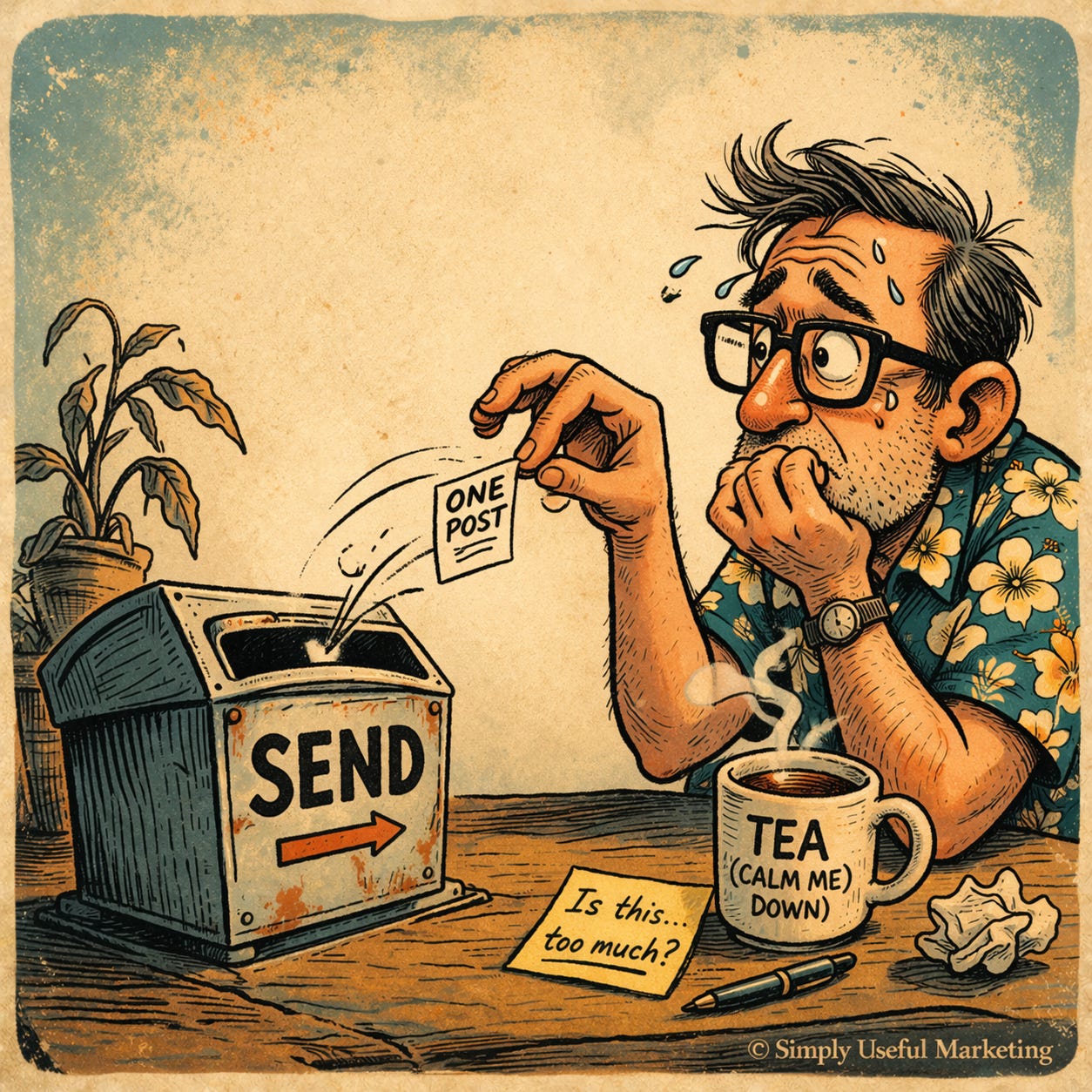
How often should you publish? The honest answer: I don’t know. Neither do you. Neither does anyone — until you start.
There is a “that’s just too much” level every newsletter reaches. But no one knows where that line is until they cross it. Your audience might want to hear from you more than you think. Don’t limit your reach voluntarily.
Start monthly. Twice a month if you can sustain it. Stick to that for three months. Then pay attention. Are people opening? Clicking? Replying? Unsubscribing in unusual numbers?
Increase the frequency until more folks than normal unsubscribe from an issue. Congratulations — you’ve found “too much.” Dial it back one notch. That’s your Goldilocks zone. For now.
Because it moves.
Here’s what the data actually says, and it’s worth knowing: MailerLite analyzed over 12 billion emails in 2025 and found that sending frequency has less impact on unsubscribes than sending irregularly. Sending less than once a month was the biggest driver of unsubscribes — not sending too often. More frequent senders (weekly, twice a week, even daily) actually had lower unsubscribe rates.
Separately, Campaign Monitor’s research shows newsletters should land somewhere between once a month and twice a week, and there isn’t much difference in open rates across that entire range. Brands sending 4–8 emails per month tend to hit the best balance.
You don’t need to worry about frequency until you actually publish one. Then another and another. Create a cadence you can stick with. Give yourself deadlines. Meet those deadlines. Publish.
If you get to the point that you really need to worry about sending “too much,” congratulations, you’re kicking ass and taking names.
Again: Be. Consistent.
If you’re reading this and realizing your newsletter is one of those things you keep meaning to start — or restart — but the “just right” question keeps freezing you up, that’s exactly the problem I built Newsletter in a Box to solve. I handle the writing, the strategy, and the showing up on schedule so you can stop agonizing and start publishing. Hit reply (bryant@simplyusefulmarketing.co) if you want to know how it works
Volume: The Barking Problem
Volume in content marketing has two meanings: output and promotion.
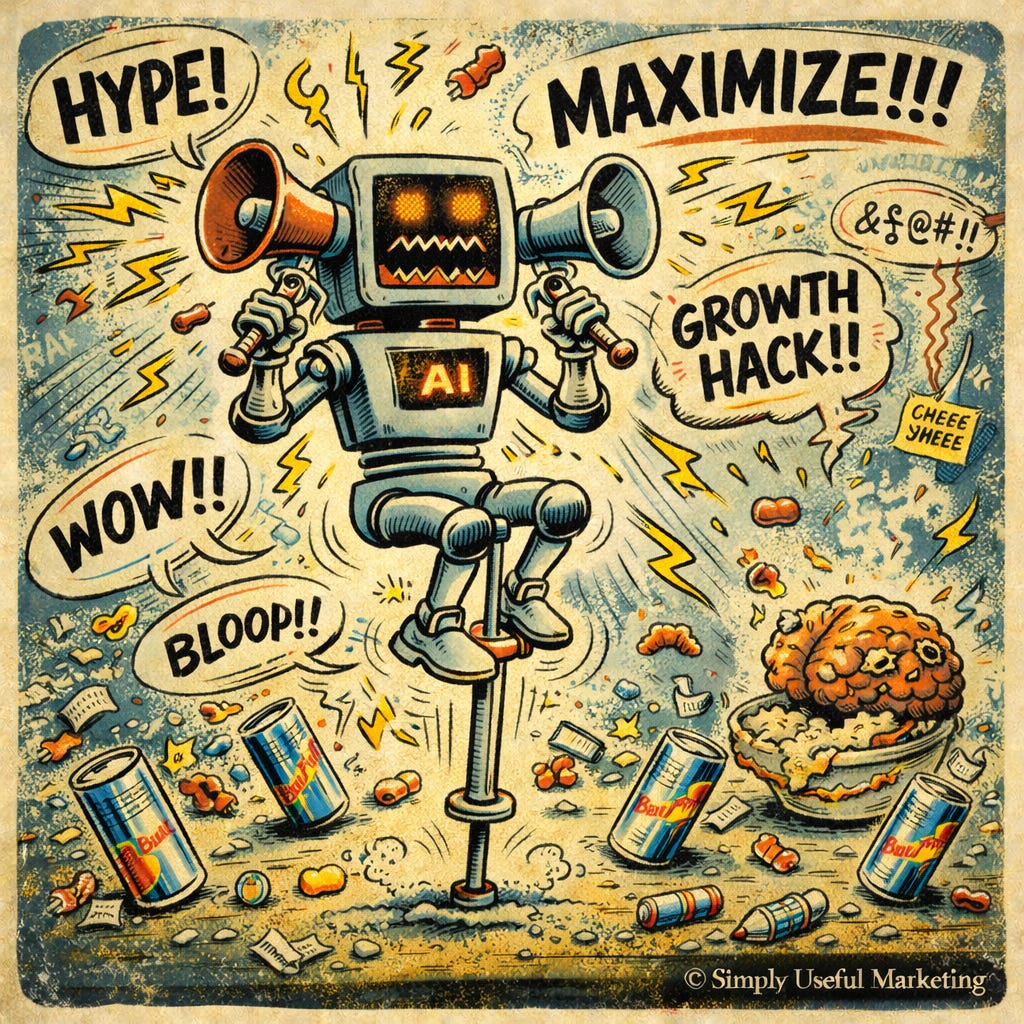
So let’s tackle output first. We just covered frequency for newsletters, but this applies to everything. Blog posts, social posts, videos, all of it. There’s a middle ground between publishing nothing and flooding every channel like a bot high on Red Bull and Sour Patch Kids with a quota. Brands published an average of 9.5 posts per day across all networks in 2024. The resulting saturation sets up a vicious cycle of doing more than your competitors who then do more than you and then you . . . until customers start to tune you out or hit block and unsubscribe.
But most small businesses and solopreneurs are nowhere near that problem. They’re not posting too much. They’re barely posting at all. If you’re agonizing over whether three LinkedIn posts a week is “too many” or if two newsletters a month is “spamming,” you’re worried about a problem you don’t have.
The second meaning is promotion — how loudly and how often you share what you’ve already made. This is where most people I talk to fall down (including folks who know better). They publish something, share it once, and move on. They want the work to speak for itself. I operated that way for years. It doesn’t work. You have to share your content more than feels comfortable. You have to ask for the sale or the meeting. You have to bark.
Not like an over-caffeinated chihuahua barking or the bot on a sugar high. But you do have to open your mouth.
The Goldilocks zone here isn’t about finding a magic posting schedule. It’s about whether you have something worth saying each time you show up. “Post with purpose” sounds like a bumper sticker, but it’s the actual answer. One thoughtful post beats three that exist because someone told you to post daily.
Rule of thumb: share at least one thing daily, even if it’s engaging with someone else’s content. And when you publish something you’re proud of, share it more than once. I promise that there are more people who would be interested in seeing it than already saw it.
Quality: The Trap That Eats Everything
And then there’s the “great” problem.
A lot of writing and marketing advice tells you to create “great content.” I’m all for great content. I’d love to write one great thing. But trying to be great before you’ve published a damn thing is how you end up frozen.
I’ve been there. When I took over as editor of a professional magazine at 26, I wanted every issue to be perfect. I had to figure out how to get out of my own way. And when I moved into content marketing years later, the same problem came back.
The truth is that even the greats aren’t always great. Drew Brees won games with 37 seconds on the clock and also threw interceptions that ended seasons. The Eagles have some incredible songs and some you skip every time. As my favorite greatest hits album title — from Primus — says: They Can’t All Be Zingers.
Focus on being useful and you might get to great on the way.
The AI flood actually makes this argument stronger than it was a year ago. As one analysis put it: the more machines produce fast, standardized, context-free content, the more humans crave analysis, experience, and deep thinking. Long-form, human-written content is becoming a marker of expertise — not because long is inherently better, but because anything real stands out (reinforcing the “longer can be better” point I made earlier).
One sobering note worth sitting with: the average bounce rate for content pages in 2026 is 45%. Nearly half of visitors leave without engaging. Quality alone doesn’t guarantee attention — distribution and trust still matter. But that’s not an argument against quality. It’s an argument that you need both: something worth reading AND the willingness to put it in front of people.
The Goldilocks zone for quality isn’t a fixed standard. It’s “better than the bots, and actually helpful to a real person.” That bar keeps moving, but it’s achievable for anyone willing to do the work.
Two Contradictory Things That Are Both True
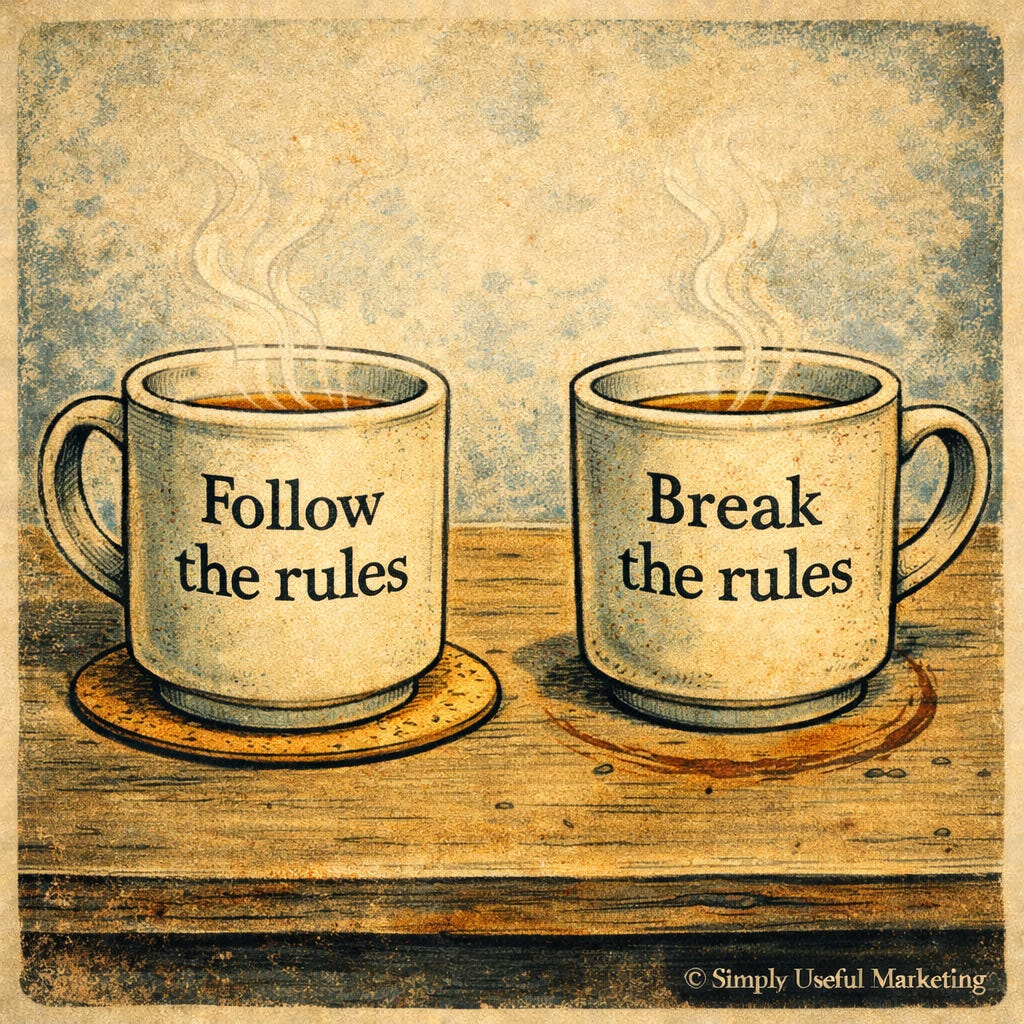
Here’s where it gets uncomfortable, because I need you to hold two ideas in your head at the same time.
First: Follow the broad guidelines. They exist to get you started and unstuck. Don’t overthink. Don’t wait for perfect. Just do it — and over time, you’ll develop a feel for what works. You’ll build a filter. “This is me” on one side, “this isn’t me” on the other.
I can’t tell you exactly how that filter develops.
There’s no secret. Do it. Do it again. Evaluate. Tweak. Revise. At some point you’ll be writing and you’ll just know if it’s right or wrong.
Second: When that filter tells you to break the guidelines — break them. Want to write something longer than the “best practices” say you should? If you believe in it and you believe your audience will get something from it — do it. No one knows your audience better than you do.
Slavish devotion to rules is as bad as having no rules at all. The guidelines are there to remove the fear, not to replace your judgment.
Mini Content Lesson
Before letting you go, a quick mini-lesson in content creation. I noted in the intro that I’ve touched on each of the topics above, but not as a single post to have them all in context. NEVER think of a piece of content in isolation. Note that this is a reflexive skill/habit built over 30 years and I still get it wrong at times; so be kind to yourself if you’re just beginning to create content.
You can bundle pieces together to build something new (Notes into a newsletter post for example). Or take something large and pull it apart (a webinar could turn into a blog post, a series of social posts, a Q&A post – with each Q&A as its own Note or Tweet; you could also bundle the content from a webinar series into a larger ebook or whitepaper).
For instance, this newsletter could turn into:
Each section as a standalone post on LinkedIn
Shorter snippets to share on Notes
A short, Simply Useful Marketing Minute video
A chapter in an ebook on online writing advice
Go deeper into each section and create more in-depth posts
Compile those posts with a bit of connection tissue and it’s a short ebook.
It’s not always effective or worthwhile to pursue every permutation of what you can do, but it is a good idea to think of how you can use/reuse what you publish.

So What the Hell Is “Just Right”?
It’s a moving target. Sometimes it doesn’t exist at all. And the search for it — the endless calibrating, the reading one more article about optimal post length, the tweaking before you’ve even shipped anything — is itself a form of procrastination.
The only way to find your version of “just right” is to publish, pay attention, and adjust. Over time, patterns emerge. You’ll notice what your audience responds to. You’ll develop instincts you can’t fully explain but learn to trust.
That’s the Goldilocks zone. It’s a feel, not a number.
And the only way to create that feeling is to start publishing and pay attention to what happens. You’ll never find “just right” by reading “just one more” article about it.
P.S. If this whole piece made you think “I know I need a newsletter, I just don’t have time to figure all this out” — that’s literally why Newsletter in a Box exists. One conversation and I can tell you if it’s a fit. Email me at bryant@simplyusefulmarketing.co and we’ll talk.
No music today, just one of the innumerable Justice League Chicago Fire SVU shows in background (I’m at my Mama’s). Though here are a few sources for further reading.
Sources for content length
https://www.averi.ai/how-to/10-content-marketing-trends-for-2026-(and-what-they-mean-for-startups)
https://www.georgescifo.com/2025/10/the-definitive-guide-to-content-length-best-practices-for-2026/
https://www.content-managers.com/insights/how-to-measure-content-performance/
https://www.amraandelma.com/top-long-form-vs-short-form-content-statistics/
Frequency Sources
I have been experimenting on LinkedIn with content. The goldilock isn't same - it varies from post to post, it's not just quality or useful content. It's somewhat rigged in LinkedIn
Since I started posting i am getting spamed to like and comment on other's post. Thats how the linkedin algorithm is tricked to believe as useful content although it's pretty garbage or irrelevant.
Happy Friday Bryant
I feel like these absolutist statements we see in content are such garbage because they don’t apply to everyone. I left LinkedIn because I love long-form writing, but people there seem to prefer short posts written like haikus. On Substack, my longer articles perform better than my shorter ones.
There was also a time when I tested publishing twice a week versus once, and it didn’t do anything for growth. In fact, it stressed me out for very little ROI.
This right here - The only way to find your version of “just right” is to publish, pay attention, and adjust. Over time, patterns emerge. You’ll notice what your audience responds to. You’ll develop instincts you can’t fully explain but learn to trust.
That’s the Goldilocks zone. It’s a feel, not a number." is SO true.